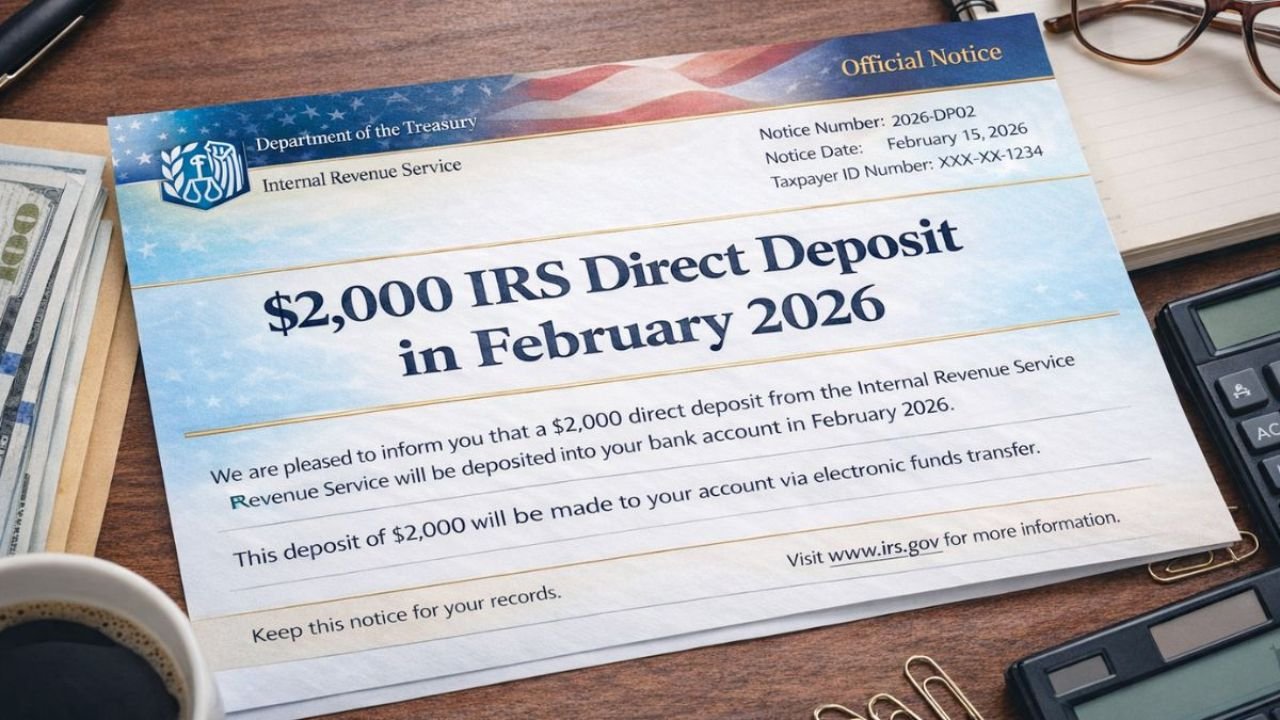
As February 2026 approaches, online claims about a $2,000 direct deposit from the federal government have gained momentum. Social media posts, short videos, and forwarded messages suggest that the Internal Revenue Service has approved a nationwide payment for all Americans.
For households managing rising grocery prices, rent obligations, insurance premiums, and winter utility costs, the promise of an unexpected deposit sounds reassuring. However, before making financial decisions based on these reports, it is critical to separate verified facts from speculation.

As of now, there is no official confirmation of a universal $2,000 IRS direct deposit for all Americans.
No Law Currently Authorizes a Universal $2,000 Payment
For the federal government to distribute a large payment to the public, a structured legal process must occur.
First, Congress must pass legislation outlining:
- The payment amount
- Eligibility criteria
- Funding sources
- Distribution procedures

Next, the President must sign the bill into law. Only then can agencies such as the Internal Revenue Service begin implementation.
As of February 2026, no such law has been enacted. There has been no formal press release, no public directive, and no official announcement confirming a nationwide $2,000 direct deposit program.
Without legislation, the IRS does not have the authority to create or distribute a new universal payment initiative. Claims suggesting that “everyone” will automatically receive $2,000 are not supported by verified government action.
Why These Rumors Often Appear During Tax Season

The timing of these claims is not accidental. Each year, January and February mark the beginning of federal tax filing season.
During this period:
- Employers issue annual income statements.
- Millions of taxpayers submit returns.
- The IRS processes refunds.
Taxpayers who file electronically and choose direct deposit often receive refunds within weeks of acceptance.
For many households, refund amounts frequently fall around $2,000. When individuals post screenshots of bank deposits showing similar amounts, those images can quickly circulate online. In some cases, viewers misinterpret these deposits as evidence of a new government payment.
In reality, these transactions are standard tax refunds — not stimulus payments or newly approved relief funds.
How Tax Refunds Actually Work
A tax refund occurs when an individual has paid more federal income tax during the year than they ultimately owed.
Overpayments may result from:
- Excess withholding from paychecks
- Eligibility for refundable tax credits
- Adjustments related to dependents or filing status
Refund amounts vary widely because each return is calculated individually. Factors that influence the final figure include:
- Total annual income
- Filing status
- Number of dependents
- Qualification for credits such as child-related or earned income credits
The recurring appearance of the $2,000 number is largely coincidental. It reflects common withholding patterns and credit structures — not a new federal disbursement.
It is also important to distinguish tax refunds from past stimulus payments. Stimulus programs were emergency measures clearly announced and implemented under specific legislation. Refunds, by contrast, are part of the routine annual tax cycle.
The Risks of Relying on Unverified Claims
Financial rumors can create unrealistic expectations. When individuals anticipate deposits that have not been officially authorized, they may make premature financial decisions.
Potential risks include:
- Delaying bill payments in expectation of incoming funds
- Taking on new expenses or commitments
- Sharing personal information with fraudulent websites
Scam activity often increases during tax season. Fraudulent messages may request banking details or claim that a fee is required to release a payment. Federal agencies do not charge fees to issue refunds or approved benefits.
Before trusting any claim about a new payment, always verify information through official government channels.
What Would Happen If a Payment Were Approved?
If a new $2,000 payment were ever authorized, the rollout would follow a clear and public process.
There would be:
- Official statements from government leaders
- Detailed guidance about eligibility
- Clear timelines for distribution
- Transparent instructions on how funds would be delivered
Such announcements would receive widespread coverage and be accessible through official agency websites. Until that level of transparency exists, assumptions about automatic deposits should be treated with caution.
How to Stay Financially Prepared
Instead of relying on speculative reports, focus on practical financial management strategies:
File Your Tax Return Promptly
Submitting an accurate and timely tax return ensures that any legitimate refund is processed efficiently.
Monitor Official Communications
Check updates directly from the Internal Revenue Service rather than relying on social media summaries.
Maintain Realistic Budget Expectations
Base financial planning on confirmed income and documented refunds. Avoid incorporating unverified payments into monthly projections.
Protect Personal Information
Never provide banking details, Social Security numbers, or passwords in response to unsolicited messages promising government deposits.
Conclusion
There is currently no approved or confirmed $2,000 IRS direct deposit for all Americans in February 2026. While many taxpayers may receive refunds near that amount, those payments are tied to individual tax filings and standard refund procedures — not a new federal relief program.
Staying informed through verified sources protects households from confusion, financial missteps, and potential fraud. Responsible planning, accurate tax filing, and careful budgeting remain the most reliable tools for navigating tax season with confidence.
Disclaimer
This article is for informational purposes only and does not constitute tax, legal, or financial advice. As of February 2026, no nationwide $2,000 IRS direct deposit or stimulus payment has been officially approved. Refund amounts and timelines depend on individual tax circumstances and current IRS regulations. For guidance tailored to your situation, consult official IRS resources or a qualified tax professional.