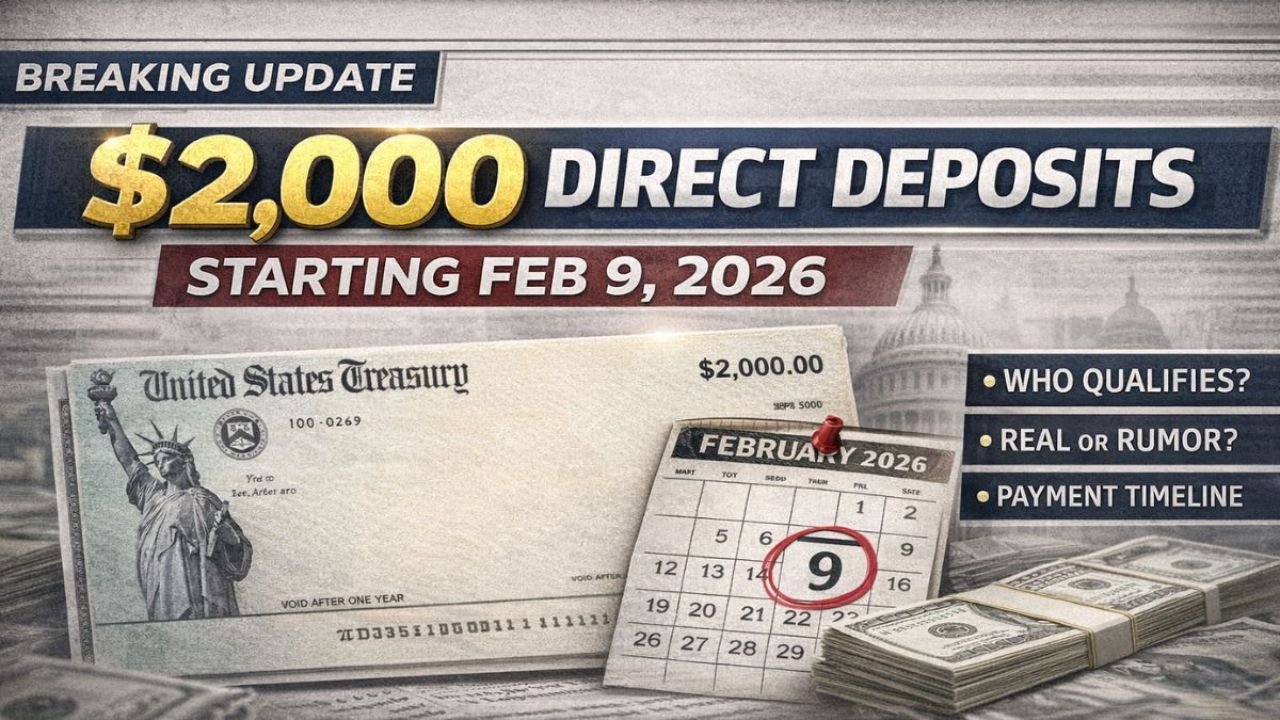
In early February 2026, social media and online forums were abuzz with claims that the federal government had begun sending $2,000 direct deposits to millions of Americans starting February 9. These messages quickly went viral, creating expectations that a new, large-scale federal payment program had been quietly implemented. However, a closer look at official sources reveals a very different reality.
No Official Nationwide $2,000 Payment Exists
As of mid-February 2026, there is no authorized federal program sending a universal $2,000 payment to all U.S. citizens. No new legislation has been passed, and there is no confirmed government plan to release such funds. Large-scale federal payment initiatives require formal approval from Congress, clear funding authorization, and public announcements detailing eligibility criteria, schedules, and methods of distribution. None of these steps have occurred for a universal February 2026 payment.

Despite the buzz online, claims of automatic $2,000 deposits are unsubstantiated. Individuals receiving funds around this amount are likely observing routine federal processes, such as tax refunds or pre-scheduled benefit payments.
Why February 9 Keeps Appearing in Rumors
The specific date of February 9 often shows up in online claims because it coincides with the period when some taxpayers begin receiving early refunds. For taxpayers who submit their federal returns electronically and choose direct deposit, refunds can be processed within a few weeks after the return is accepted. Depending on income, tax withholding, and refundable credits, some of these refunds may approach $2,000.
When multiple people receive deposits at the same time, it can create the illusion of a new government program. Past stimulus efforts and relief payments, many of which used rounded figures like $1,200 or $2,000, also contribute to the perception that a similar deposit is happening again.
Legitimate Sources of $2,000-Like Deposits

Although no new universal payment exists, certain individuals may legitimately receive deposits near $2,000 through established channels:
- Federal Tax Refunds: Refund amounts vary based on annual earnings, tax withholdings, and eligibility for credits such as the Earned Income Tax Credit (EITC) or Child Tax Credit.
- Social Security or Disability Benefits: Depending on a recipient’s work history and benefit calculations, monthly payments can reach similar amounts.
- Veterans’ Benefits: Certain veterans and their families may receive higher-than-average payments based on eligibility and entitlements.
All these programs operate under pre-existing rules and schedules. There is no one-time, unannounced $2,000 payment issued to the general public. Eligibility always requires prior enrollment, application, or filing of tax returns.
How Real Federal Payments Are Processed
Understanding how legitimate federal deposits are scheduled helps prevent confusion:
- Tax Refunds: Electronic returns are typically processed within about three weeks after acceptance, provided no errors or additional verification is required. Mailed checks can take longer.
- Monthly Benefits: Programs like Social Security, disability payments, and veterans’ benefits follow fixed schedules established in advance. Direct deposit is the most reliable and fastest method of receiving funds.
No federal program randomly deposits large sums to all citizens without prior verification or enrollment.
Protecting Yourself From Scams
Whenever messages promise unexpected government payments, caution is essential. Red flags include:
- Requests for personal banking information via email, text, or phone.
- Unsolicited instructions to “verify” or “unlock” funds.
- Links to unofficial websites claiming government authority.
Official agencies never request sensitive personal or banking information through unsolicited messages. The safest way to verify potential deposits is by checking official government websites and secure personal accounts.
Focus on Verified Financial Actions
Instead of chasing unconfirmed $2,000 deposits, individuals should prioritize practical, legitimate steps to secure federal funds:
- File tax returns accurately and early, using direct deposit.
- Keep personal records updated with Social Security, IRS, and other benefit agencies.
- Monitor official government announcements for program eligibility and guidance.
Taking these actions ensures timely access to funds while avoiding misinformation and potential scams.
Final Thoughts
The viral claims of a nationwide $2,000 direct deposit beginning February 9, 2026, are false. Deposits seen by some individuals during this period are most likely regular tax refunds or pre-scheduled federal benefits. Remaining informed through official sources, verifying information, and maintaining secure account practices are the best ways to navigate such rumors.
Disclaimer: This article is intended for general informational purposes only and does not constitute tax, legal, or financial advice. Payment eligibility, deposit amounts, and timelines depend on individual circumstances and official government rules. For accurate, personalized guidance, consult government websites or a qualified tax or financial professional.