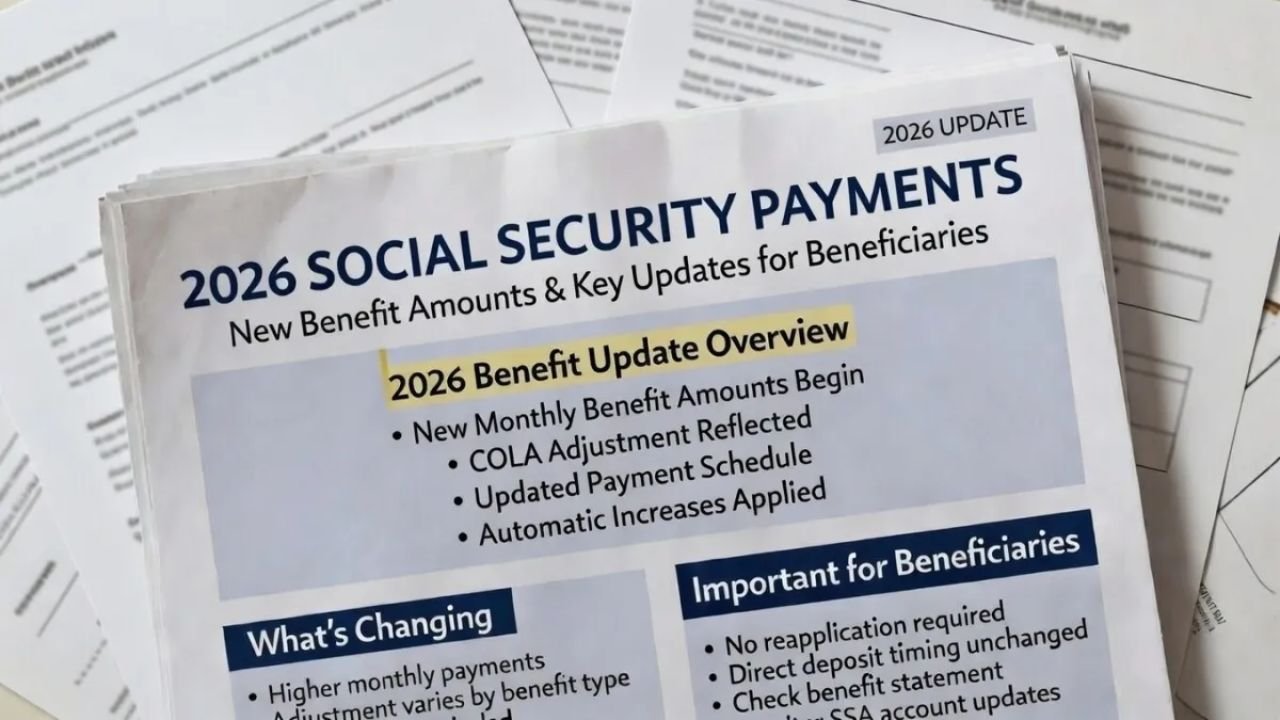
The first Social Security payments of 2026 have officially reached bank accounts across the United States, bringing updated benefit amounts for millions of retirees, disabled workers, and survivors. For many households, these monthly deposits are not supplemental income—they are the financial foundation that supports housing, food, healthcare, and daily living expenses.
January payments are especially significant because they reflect annual updates, including the latest cost-of-living adjustment (COLA) and any revised deductions that take effect at the start of the year. As a result, recipients often review their first deposit carefully to confirm the new amount and ensure it aligns with official notifications.

Understanding how these changes work can help beneficiaries manage expectations and plan their finances with confidence.
What Changed in the First 2026 Payment?
Each January, Social Security benefits are recalculated to reflect inflation-based adjustments and updated program costs. These changes apply to retirement, disability, and survivor benefits administered by the Social Security Administration.
The most widely discussed update is the annual cost-of-living adjustment. This increase is designed to help benefits keep pace with rising prices for goods and services. When inflation affects essentials such as groceries, housing, and medical care, the COLA helps preserve purchasing power.

Although the percentage increase is applied uniformly, the dollar impact varies depending on each individual’s existing benefit amount.
How the Cost-of-Living Adjustment Works
The COLA is calculated using national inflation data from a designated consumer price index. When inflation rises during the measured period, benefits increase by a corresponding percentage.
For example, if a recipient was receiving $1,500 per month, a percentage increase would add a specific dollar amount to that base figure. Someone receiving $2,500 would see a larger dollar increase, even though the percentage adjustment is identical.

This explains why two beneficiaries may experience different changes in their monthly deposits.
Importantly, the adjustment applies automatically. Recipients do not need to file an application or take additional steps to receive the updated amount.
Social Security Payment Schedule for 2026
The Social Security Administration follows a structured distribution schedule to ensure payments are processed efficiently.
Payments Based on Start Date
Individuals who began receiving benefits before May 1997 typically receive their payments near the beginning of each month.
Payments Based on Birth Date
Most other beneficiaries receive payments according to their birth date:
- Birthdays between the 1st and 10th: Second Wednesday of the month
- Birthdays between the 11th and 20th: Third Wednesday of the month
- Birthdays between the 21st and 31st: Fourth Wednesday of the month
If a scheduled payment date falls on a weekend or federal holiday, deposits are generally issued on the closest preceding business day.
This staggered system allows the agency to process tens of millions of payments without disruption.
Why Your Net Deposit May Look Different
While the COLA increases gross benefits, some recipients may notice that their net deposit does not rise as much as expected. In certain cases, the deposited amount may appear nearly unchanged.
This often occurs because deductions are applied before funds reach a beneficiary’s bank account.
Medicare Premium Adjustments
One of the most common deductions involves Medicare Part B premiums. If premiums increase at the start of the year, they are automatically withheld from Social Security benefits.
An increase in healthcare premiums can offset part of the cost-of-living adjustment. As a result, although the gross benefit has risen, the net amount deposited may feel smaller than anticipated.
Reviewing the annual benefit statement helps clarify the difference between the total benefit and the amount deposited after deductions.
Other Factors That Can Affect 2026 Benefits
Beyond inflation adjustments and Medicare premiums, several personal factors may influence payment amounts:
Earnings While Receiving Benefits
Retirees who continue working before reaching full retirement age may have temporary reductions if their earnings exceed annual limits.
Disability Reviews
Recipients of disability benefits may undergo periodic eligibility reviews. If circumstances change, benefits could be adjusted accordingly.
Changes in Personal Information
Marriage, divorce, changes in dependent status, or corrections to earnings records can also affect benefit calculations.
Promptly reporting updates to the Social Security Administration helps prevent overpayments or future adjustments.
Planning Your 2026 Budget With the New Benefit Amount
The first Social Security payment of the year often sets the tone for annual budgeting. Once the updated monthly amount is confirmed, beneficiaries can make informed decisions about recurring expenses.
Consider reviewing:
- Housing and utility costs
- Healthcare expenses and insurance premiums
- Debt payments
- Emergency savings contributions
Even modest annual increases can make a meaningful difference when managed strategically. A proactive financial plan ensures that the benefit adjustment supports long-term stability rather than being absorbed by rising costs.
Staying Informed and Monitoring Your Account
Beneficiaries are encouraged to review their official benefit statements and monitor their payment history through secure online portals. Official communications provide a detailed breakdown of gross benefits, deductions, and net deposits.
Avoid relying on unofficial sources or rumors about unexpected payment changes. Verified information directly from the administering agency remains the most reliable way to stay informed.
Final Thoughts
The first Social Security payments of 2026 reflect updated benefit amounts designed to help recipients navigate rising living costs. While the cost-of-living adjustment provides an important increase, deductions such as Medicare premiums may influence the final deposit amount.
By understanding how these adjustments work and reviewing personal benefit details early in the year, recipients can approach 2026 with clarity and confidence. Careful planning ensures that Social Security income continues to serve as a stable and dependable financial resource.
Disclaimer: This article is for informational purposes only and does not provide legal or financial advice. Social Security benefit amounts, deductions, and payment schedules vary based on individual circumstances and official policies. For accurate and personalized information, consult official Social Security Administration resources or contact the appropriate agency directly.